 Cloud Storage
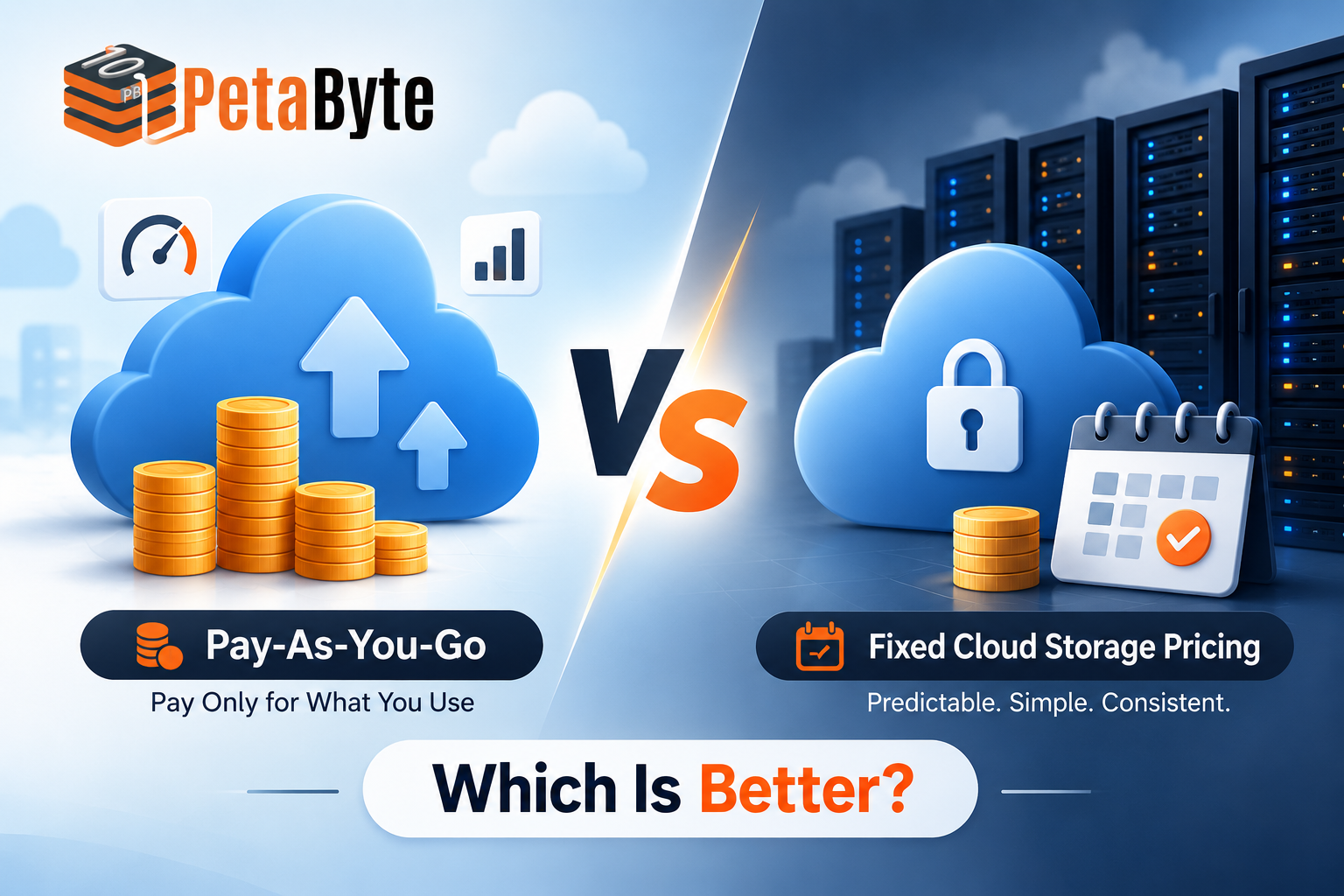
 Pay-As-You-Go Vs Fixed Cloud Storage Pricing: Which Is Better?
Selecting a storage service does not often mean choosing a vendor alone; it means selecting a billing strategy that aligns with the way data operates in the system. Currently, there are two predominant ways of calculating storage costings: pay-as-you-go billing and fixed-rate billing. The first option involves charging a company according to its actual usage levels while the second option includes paying a single predetermined price monthly. These models have their respective groups of customers, and both of them may be potentially harmful if the wrong decision is made. Knowing the ins and outs of Cloud Storage Costing is what ultimately makes the difference between spending and saving.
Why Is the Billing as Important as the Storage?
The first thing that most customers look at when they compare different storage services is the price per GB. This is incorrect. The reason behind the differences between various cloud providers does not lie in the cost itself but in its dynamics. Some services require additional fees for such things as retrieving data, using their APIs, egress, and access to backups, besides storing the information. In other words, one plan may seem cheaper until the moment when you use it and the costs start rising.
And this is precisely why the comparison should be based not only on the basic rate but on the behaviour of the billing system during peak times or growth in traffic.
What Does Pay-as-You-Go Storage Really Mean?
This is a metered form of pricing that charges you only for what you actually use, whether that be the number of gigabytes of storage you have used, or the number of requests, as well as any bandwidth consumed.
It suits these kinds of situations:
- Start-ups and early-stage ventures with uncertain data volume
- Seasonal companies with sharp peaks and troughs of demand
- Teams testing out new applications before committing to capacity
When it’s a risk:
- Your costs can vary wildly from month to month
- High levels of access/retrieval can cost you money in hidden fees
- Your finance team probably won’t like how unpredictable forecasting is
For those firms whose storage requirements change all the time, this form of pricing can actually be very economical. But it does require you to monitor your usage metrics carefully; otherwise your bill could creep up without you realizing it.
What Does Fixed Cloud Pricing Provide?
Unlike the previous example, fixed cloud pricing will charge you a flat monthly rate depending on the storage you use, no matter how many times you access it or retrieve any information from there.
When it can work for you:
- Businesses which require predictable expenses for budgeting and auditing purposes
- Firms with constant, high storage requirements: backup files, archives, video surveillance footage or any other compliance data
When it can be problematic:
- You might be overspending in case your actual usage is much lower than planned
- Increasing storage requirements could mean upgrading to another plan, not just spending more
Flat pricing strategy offers some benefits at the expense of less flexibility and in many cases, finance departments do find it useful.
Enterprise Storage: An Alternative List of Criteria
However, when it comes to enterprise storage, the situation changes. Enterprises are not only storing files but also compliance records, customers’ data, archiving information and so on. At this level of business activity unpredictable billing can spoil all department budgeting and cause a number of problems. That’s why enterprises choose flat rate pricing models for their basic storage, while using pay as you go tiers as supplementary services for overflow and projects testing.
Business Cloud Storage Approach
As for young companies, business cloud storage pricing decision will depend on one question: is there a necessity in cost predictability or in elasticity? New start-up companies prefer pay as you go approach to deal with uncertain data usage volumes and then switch to flat rate pricing model when data usage patterns become more predictable. Existing small and medium businesses prefer to use fixed billing model right from the beginning, since it eliminates any unpredictable costs.
Nevertheless, one should not forget about other important factors like security, fast support service, unlimited scalability and absence of any hidden fees for retrieval.
Cloud Storage India: A Market with Its Own Considerations
There are some unique features of the cloud storage India market that are worth mentioning. Most of the international vendors calculate costs in dollars, impose egress fees, and send data through servers located abroad, thus raising expenses and delays. In turn, local providers charge in rupees without complicated billing, which is common for global hyper scalers.
It is important for local start-ups, SMBs, and enterprises since even the same model of billing may be more convenient to use locally rather than internationally. For example, monthly billing in rupees for the set amount of GB at a fixed price of ₹999/month will be easier to budget than a dollar-based bill calculated according to usage.
But Which One of Them Is Better?
It’s really difficult to say which one of these two options is better; there isn’t a single winning variant, and everything depends on your specific scenario:
- Metered billing will suit you best if you don’t know your exact data volume, are in the initial stage of your development or experience some seasonality in the amount of your storage.
- Fixed pricing will be preferable if you want predictability of expenses, have growing storage demands, and do not want to face unpleasant surprises related to retrieving or accessing your information.
Sometimes organizations use a combination of both variants: flat rate schemes for regular storage and metered billing for occasional data excesses.
Conclusion
The best strategy when analysing any kind of storage would be looking beyond their advertised price and thinking about the behaviour of their billing schemes depending on increasing amount of data. Whichever kind of billing scheme you prefer, the common idea behind these different variants is pretty simple, storage solution that can scale easily and won’t become a source of headaches related to budgeting.

Cloud Storage for Hospitals: HIPAA vs India’s Data Protection Requirements
September 26, 2026
Cloud Data Archiving: The Complete Guide for Businesses in 2026
September 7, 2026